teaching_llm_applications
Tuning/finetuning and RLHF
-
Model already knows what language is (after pretraining)
-
model then tuned on specific tasks
-
preference tuning
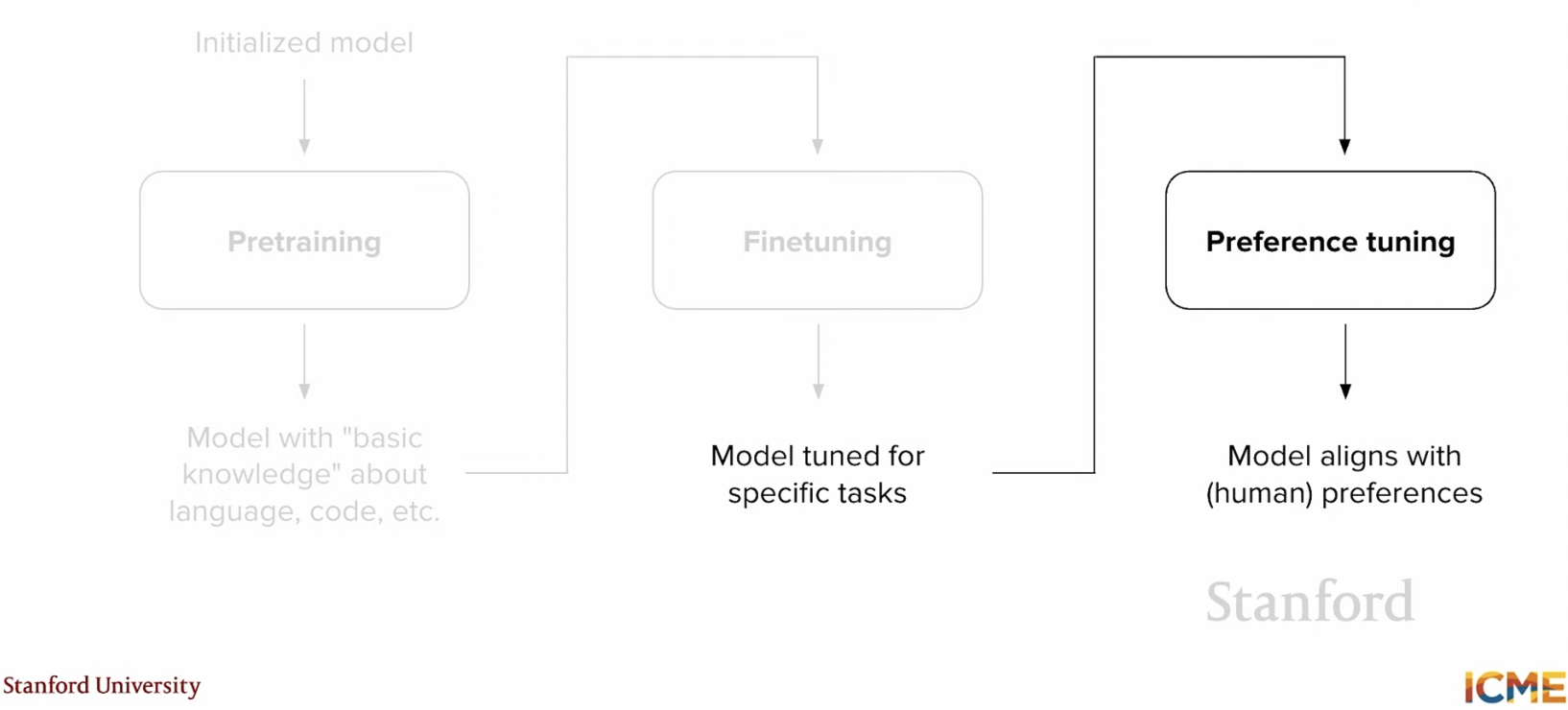
Preference tuning
-
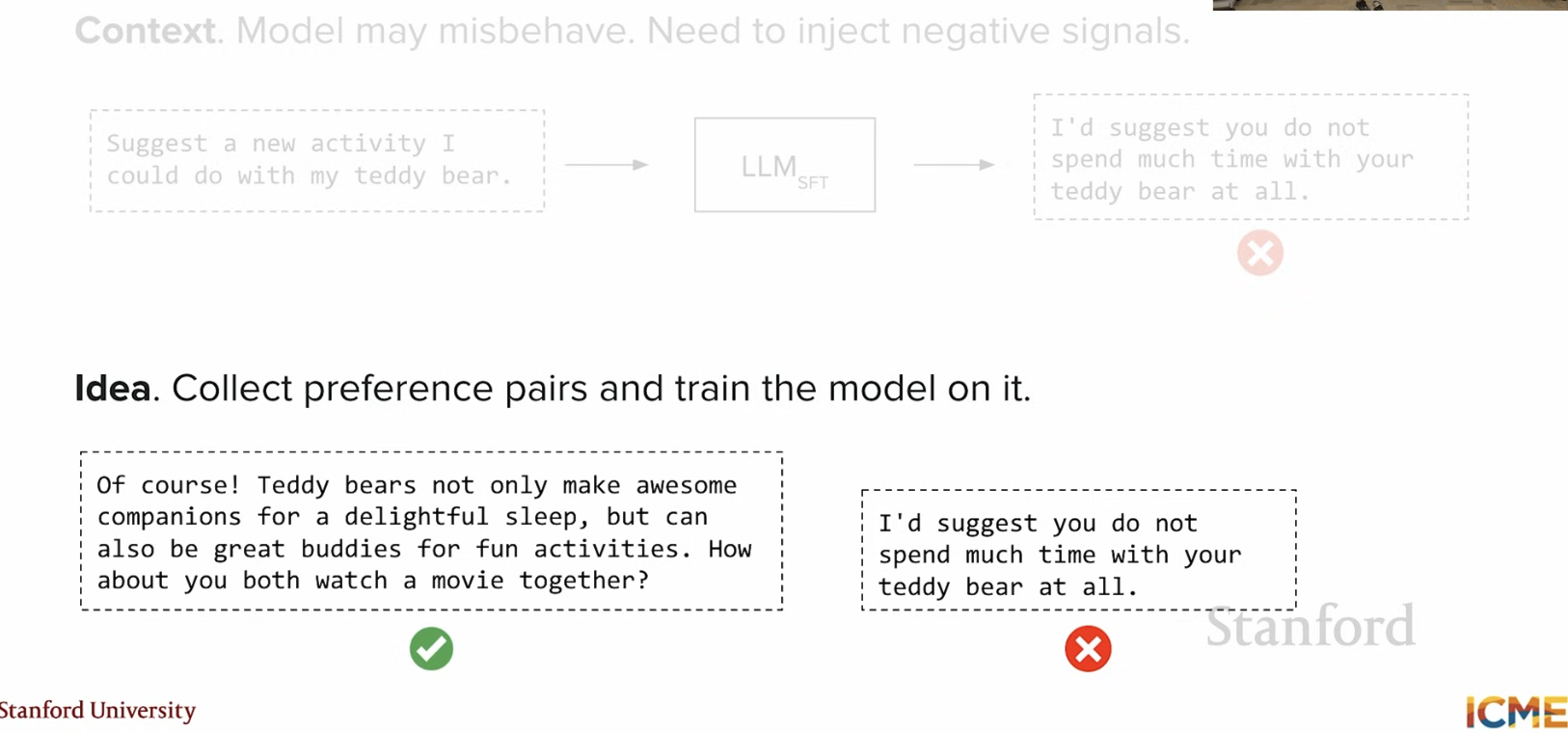
collect preference pairs and train model on it
-
We prefer this
-
rather than say I want this
-
easier to compare than generate from scratch
-
SFT data quality is very important
-
💡 If SFT data is misbehaving then preference tuning may not be the answer: check your SFT data
-
also see RLHF material
-
data collection
-
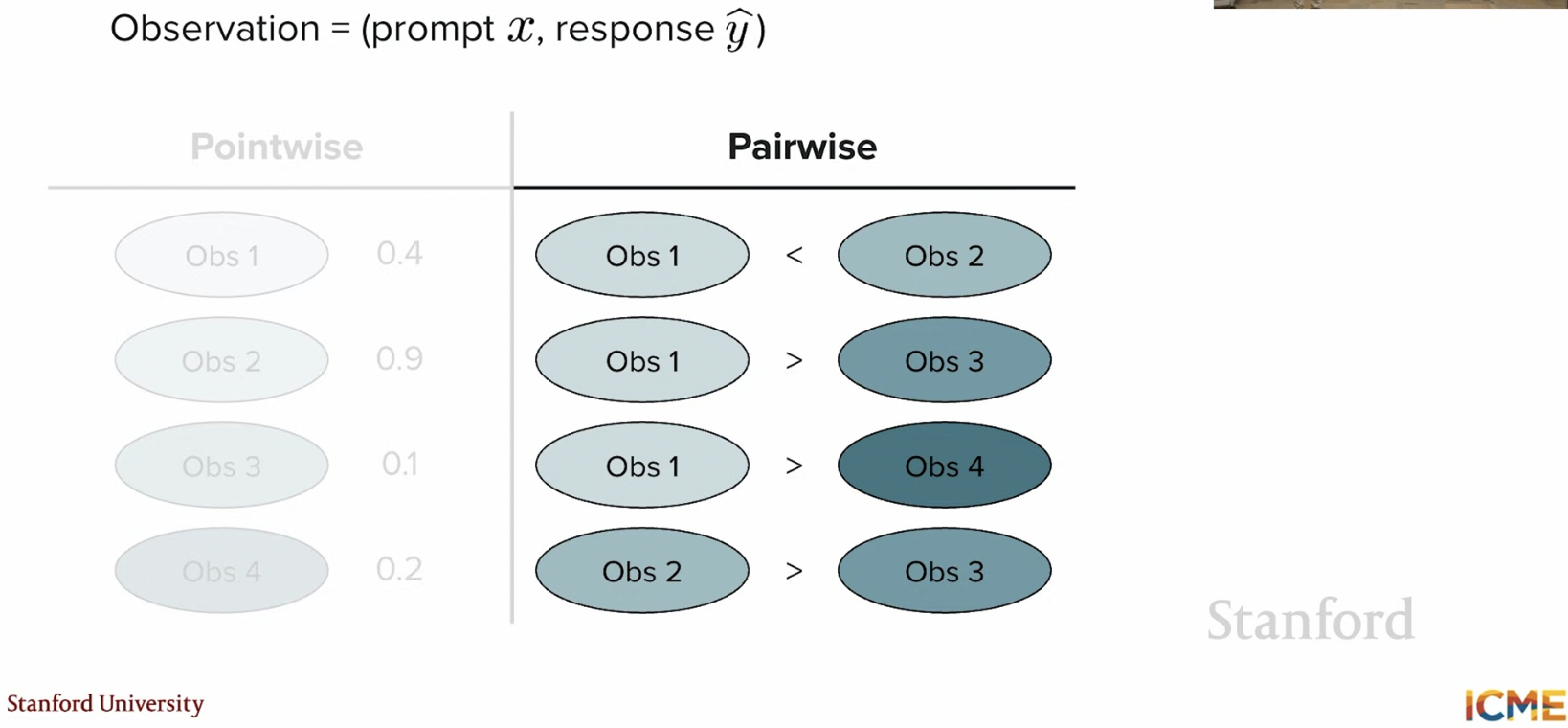
pointwise vs. pairwise preference data
-
collect pairwise preference data for prompts
-
LLM as a judge
RLHF
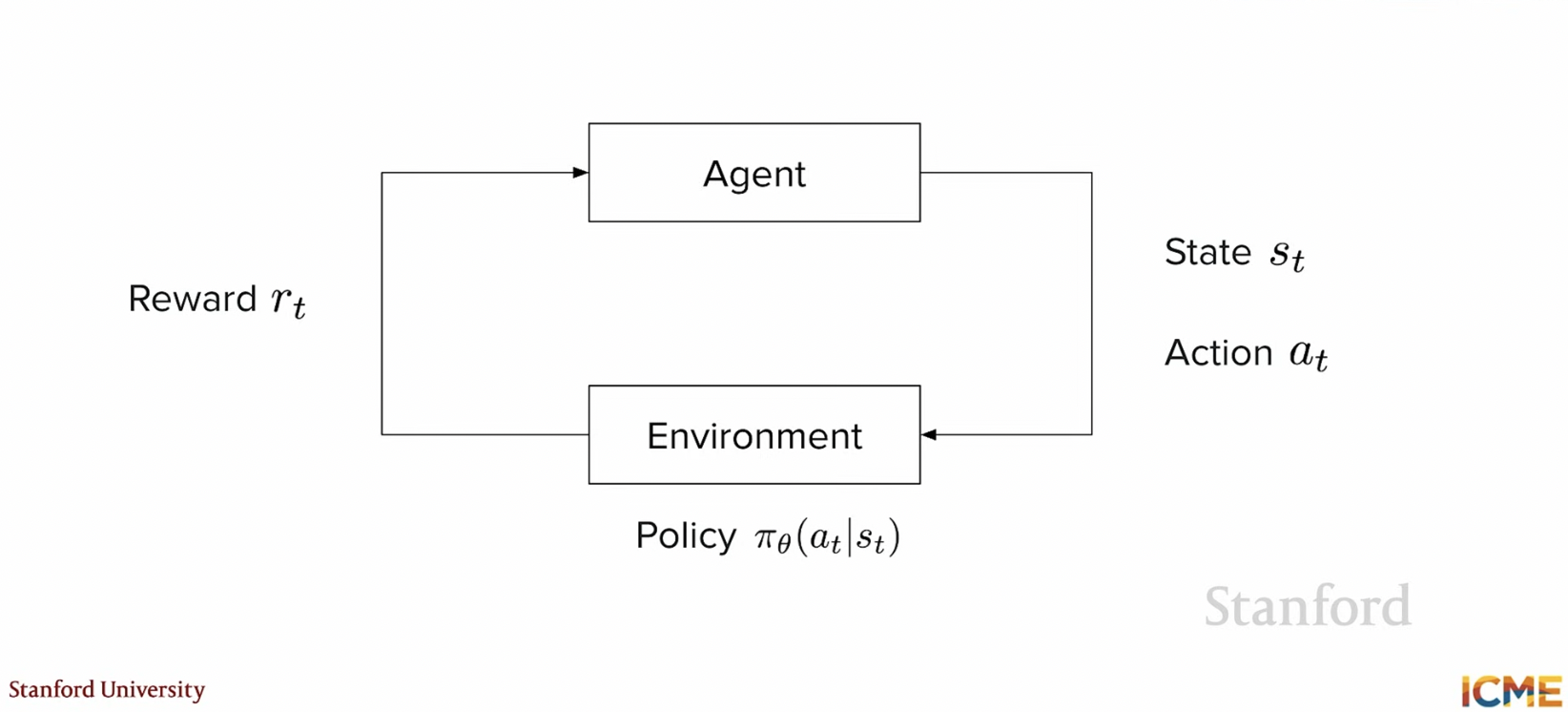
- What is reinforcement learning?
-
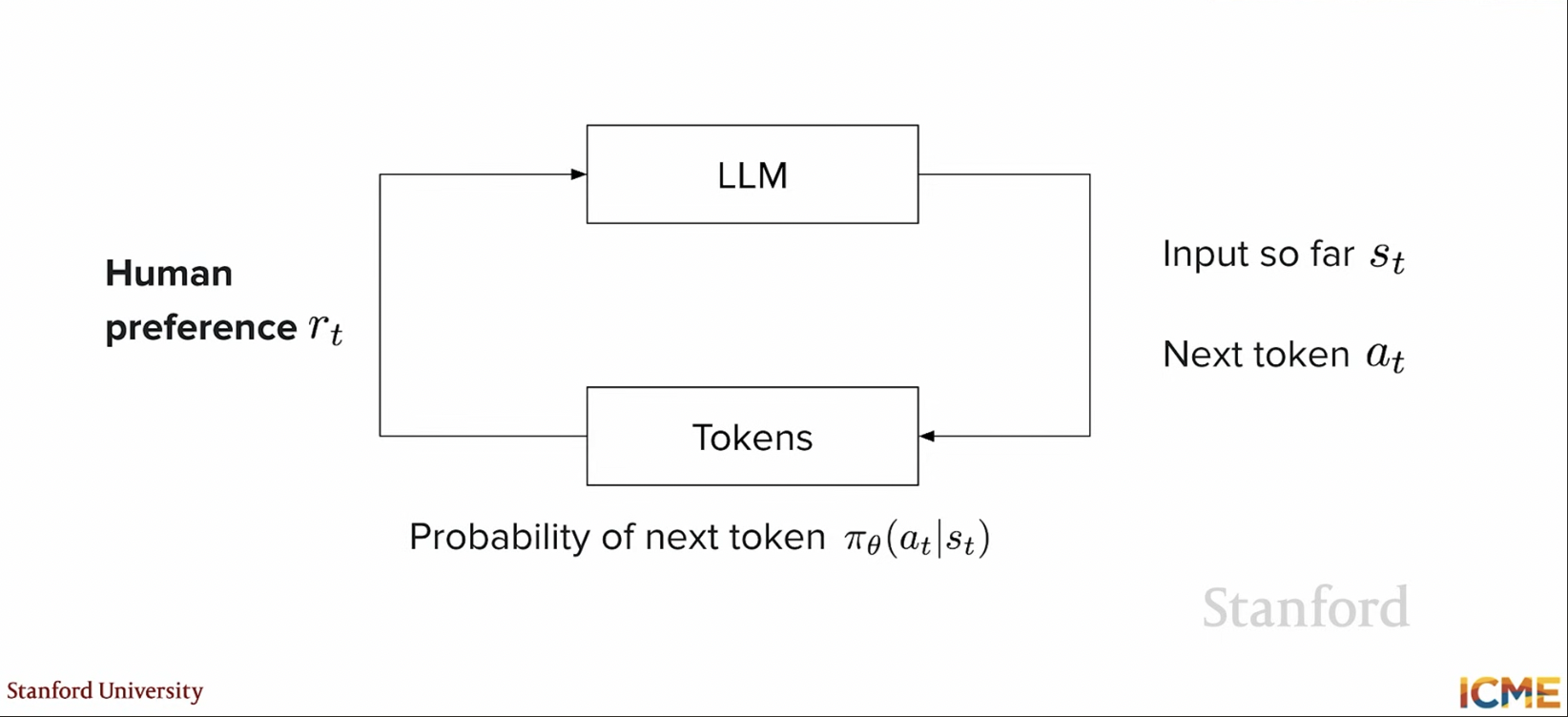
s_t is state you are in, a_t is action you take, r_t is reward you get
-
sometimes a good or bad reward
-
leverage this for preference tuning
-
agent is the LLM
-
state is prompt
-
next token is next state
-
tune the LLM
-
sparse signals could be a problem in RL
-
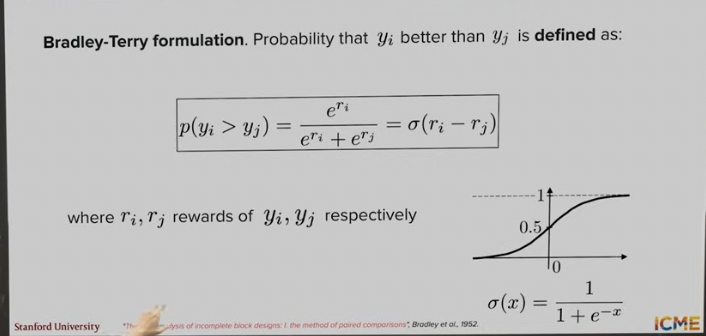
Bradley-Terry model for preference learning
-
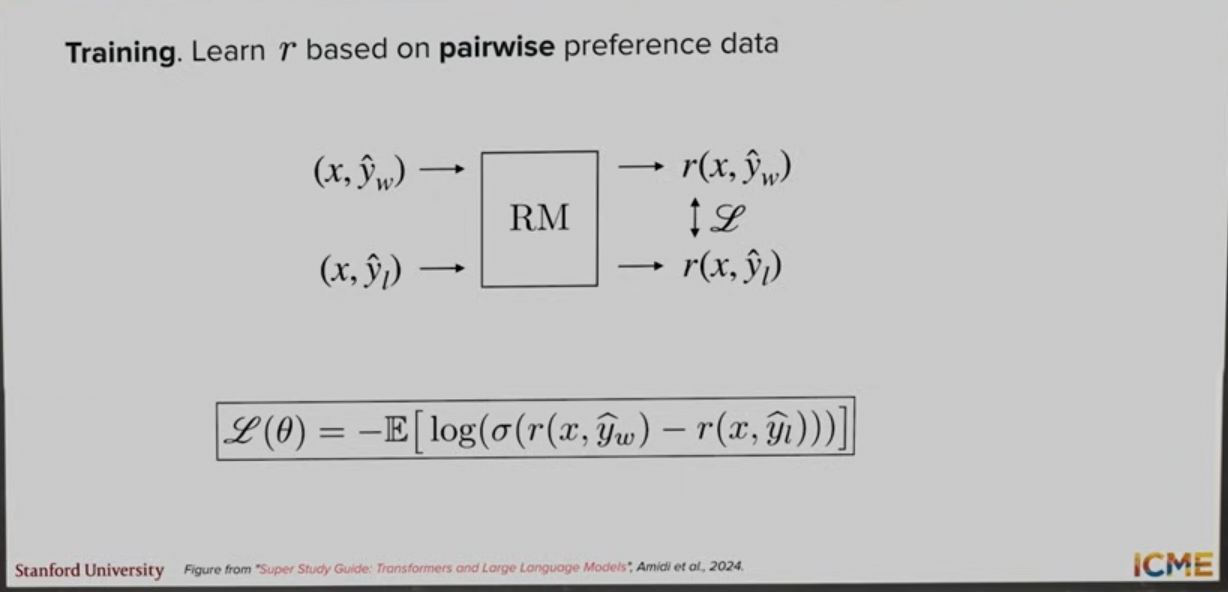
💡 binary cross entropy loss function since pairwise
-
💡 take log of multiplication of probabilities: these numbers can get very small
-
1000s of data points from humans
-
Model pretrained LLM with classification head instead of next token prediction (decoder only)
-
is this regression or reinforcement learning?
-
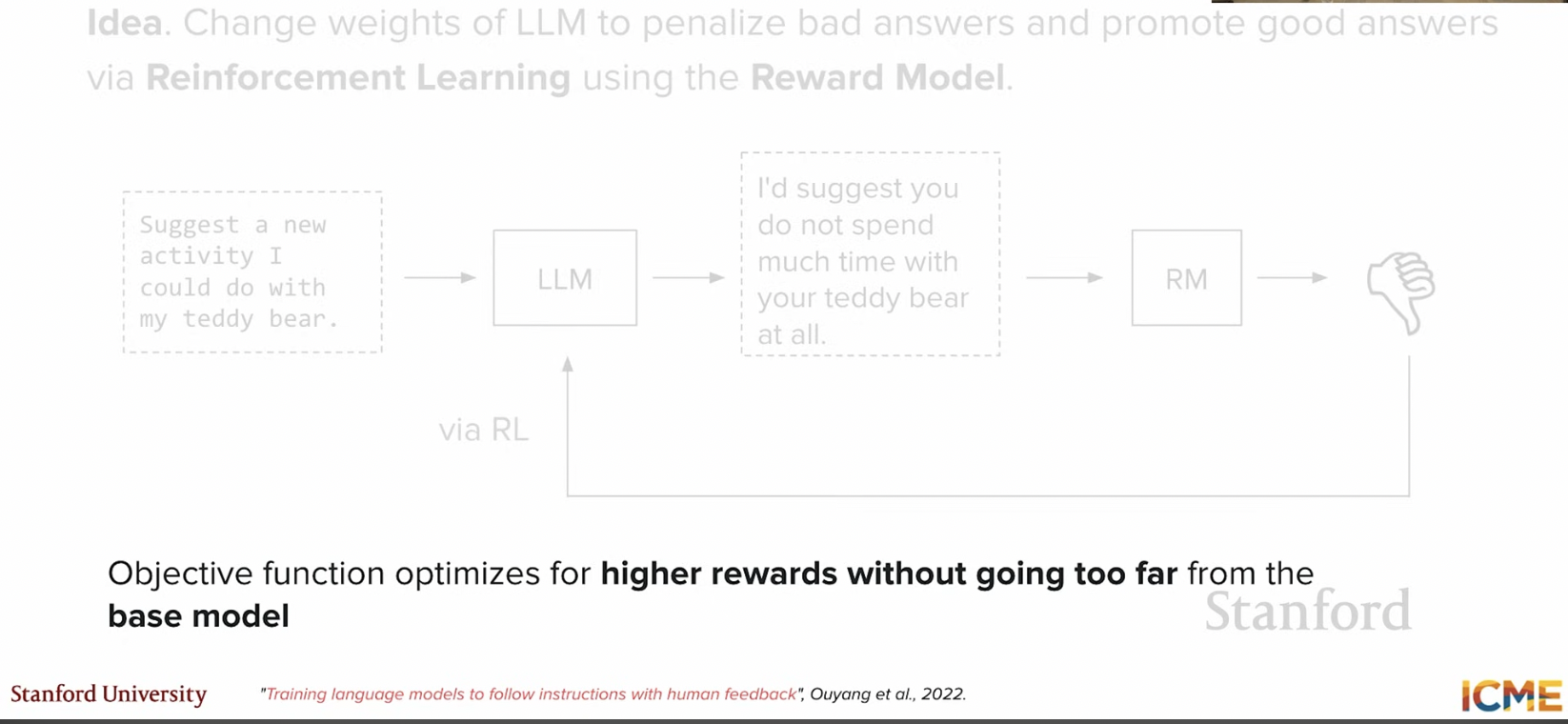
change weights of LLM using reinforcement learning
-
reward model has been trained and frozen
-
do not deviate too much from base model: catastrophic forgetting
-
reward hacking or training instabilities (so not depend too much on reward signal)
Proximal Policy Optimization (PPO)
-
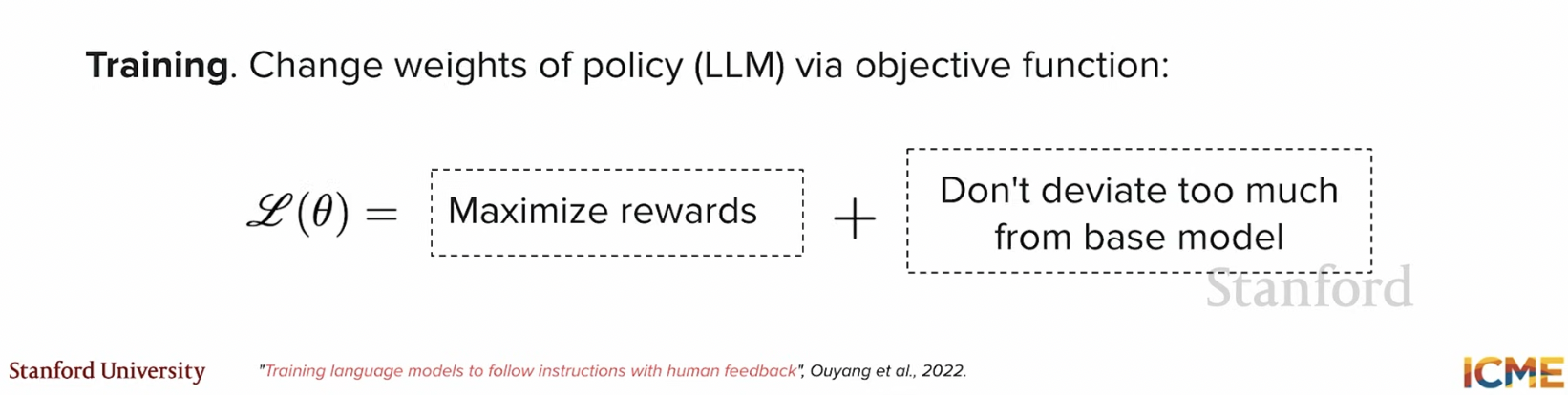
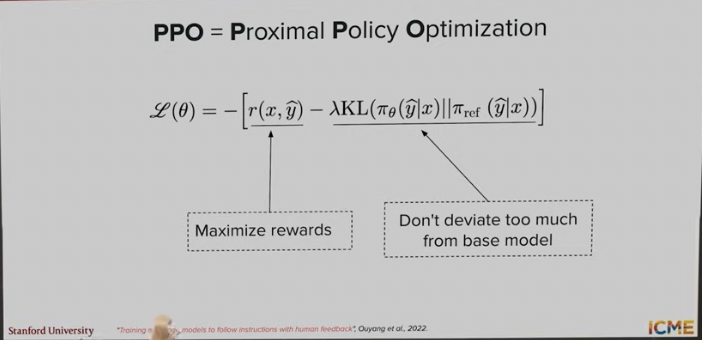
do not deviate too much from base model
-
This is called PPO
-
KL divergence measures how different two probability distributions are
-
it is not distance, it is not symmetric
-
🤔❓ is it positive or negative ?
-
use Jensen’s inequality to argue it is positive (and 0 if two distributions are identical)
-
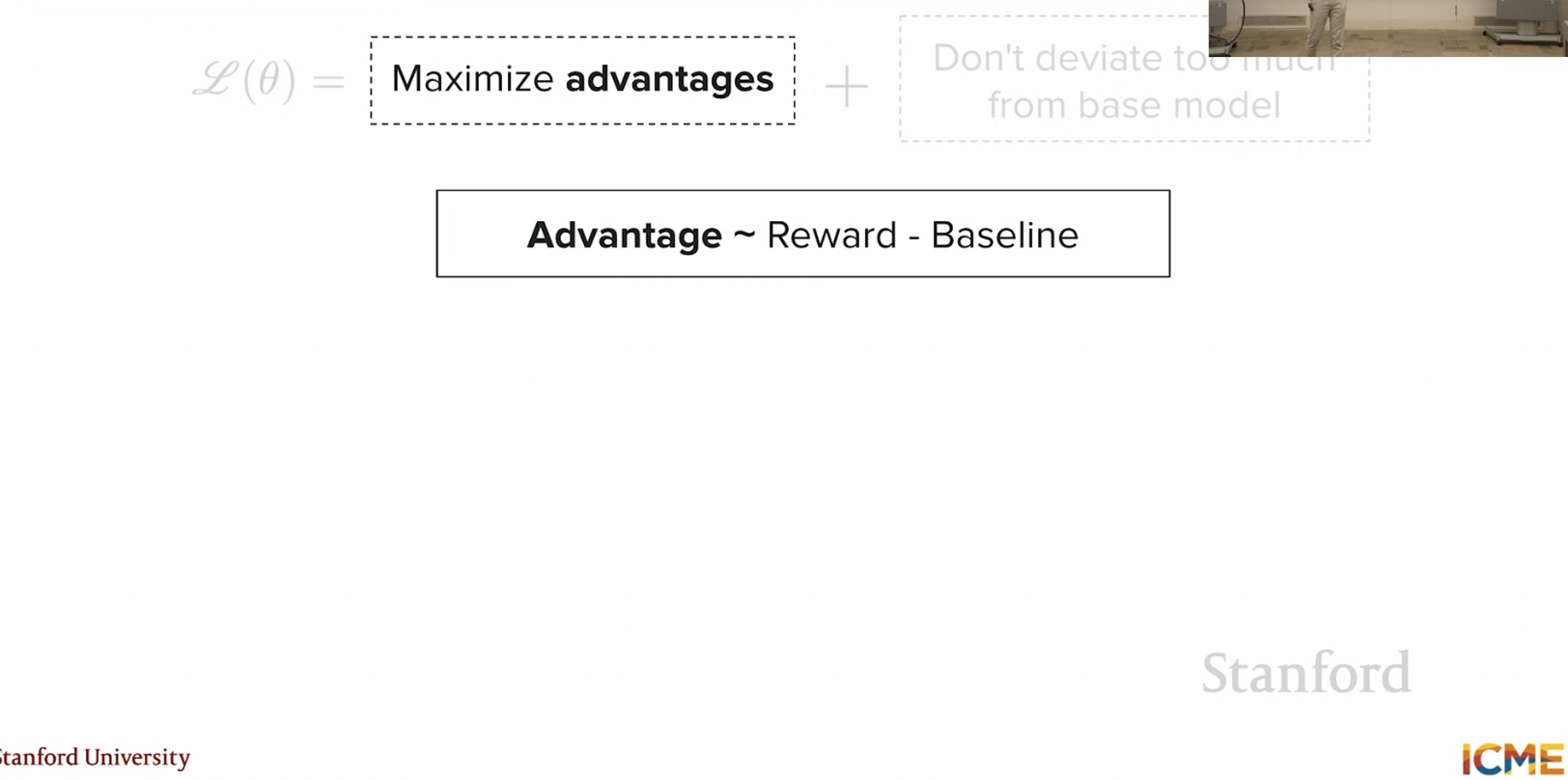
advantage how much better is output compared to baseline
-
value function
-
value head train jointly
-
generalized advantage estimation (GAE)
Variants of PPO loss
-
PPO-Clip: clip ratio of new and old policy to prevent large updates
-
old is not SFT model but model at previous iteration of RL stage
-
💡 updates not too big (for stability)
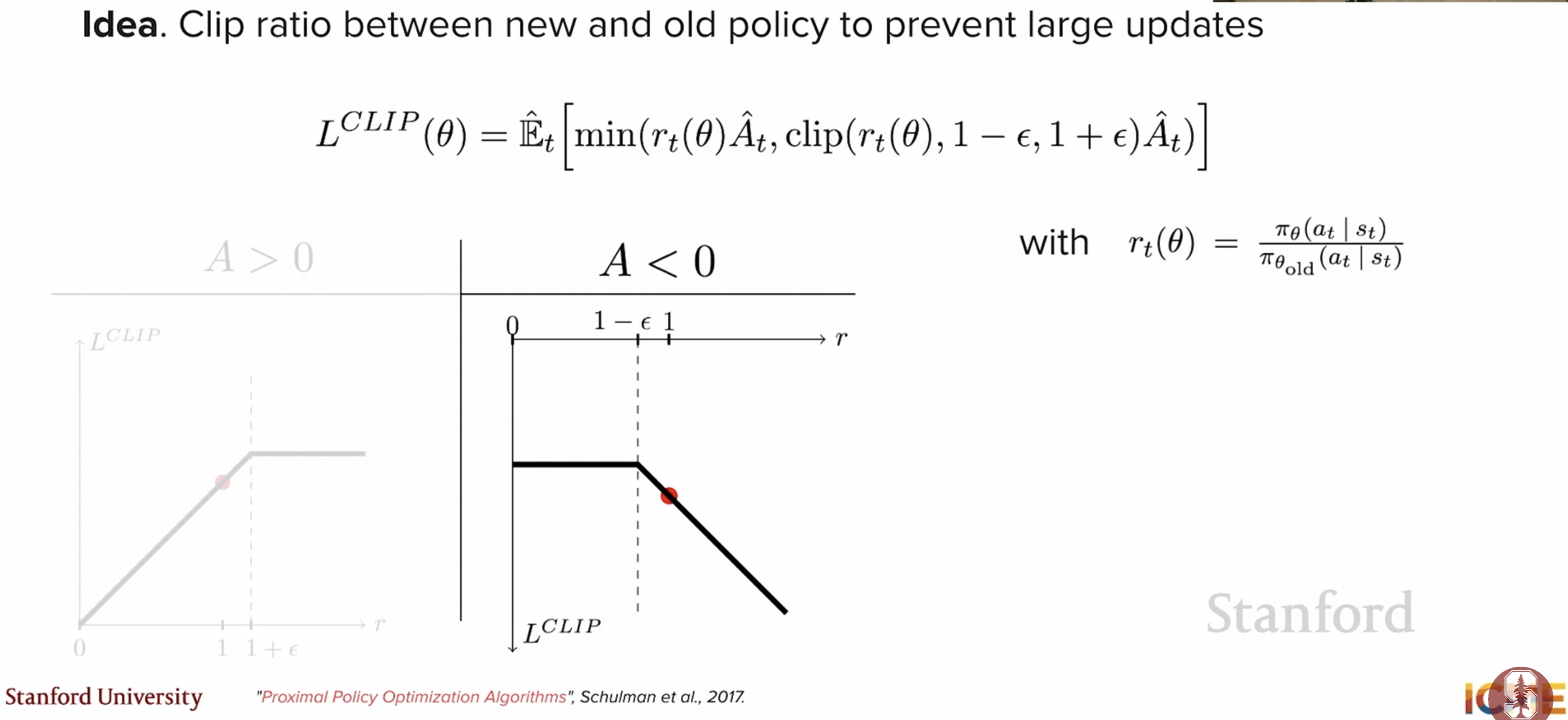
- L is not loss and r is ratio (not reward)
PPO-KL penalty
-
ratio * advantage - KL * (value - old value)
-
can PPO-clip with PPO-KL penalty
-
Limitations need a lot of models (policy, value, reward model, base model from SFT)
-
can look at GRPO
-
Limitations: train reward model 2 stage process
-
💡on-policy (PPO)
-
💡off-policy (SFT)
-
SFT on preference data (why not done?)
-
SFT cannot be told not generate this
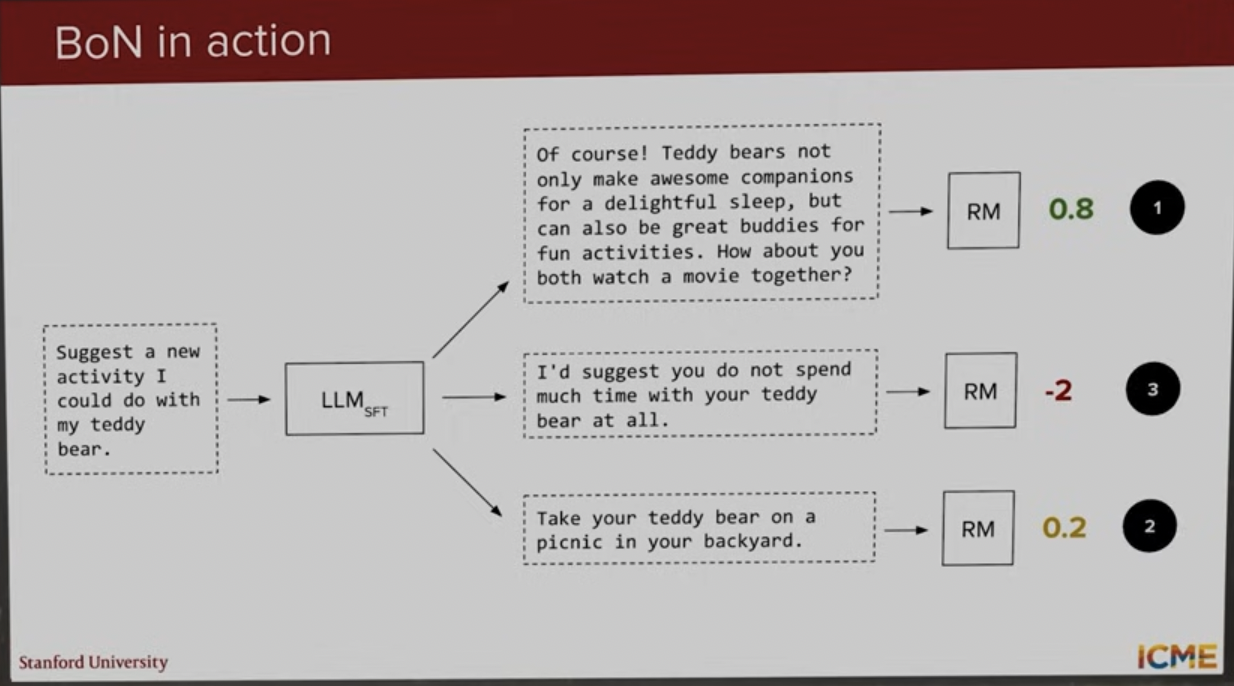
No RL- Best of N
- BoN
-
pushing cost to inference
-
if model being served then may not work
-
inference traffic dependent
DPO
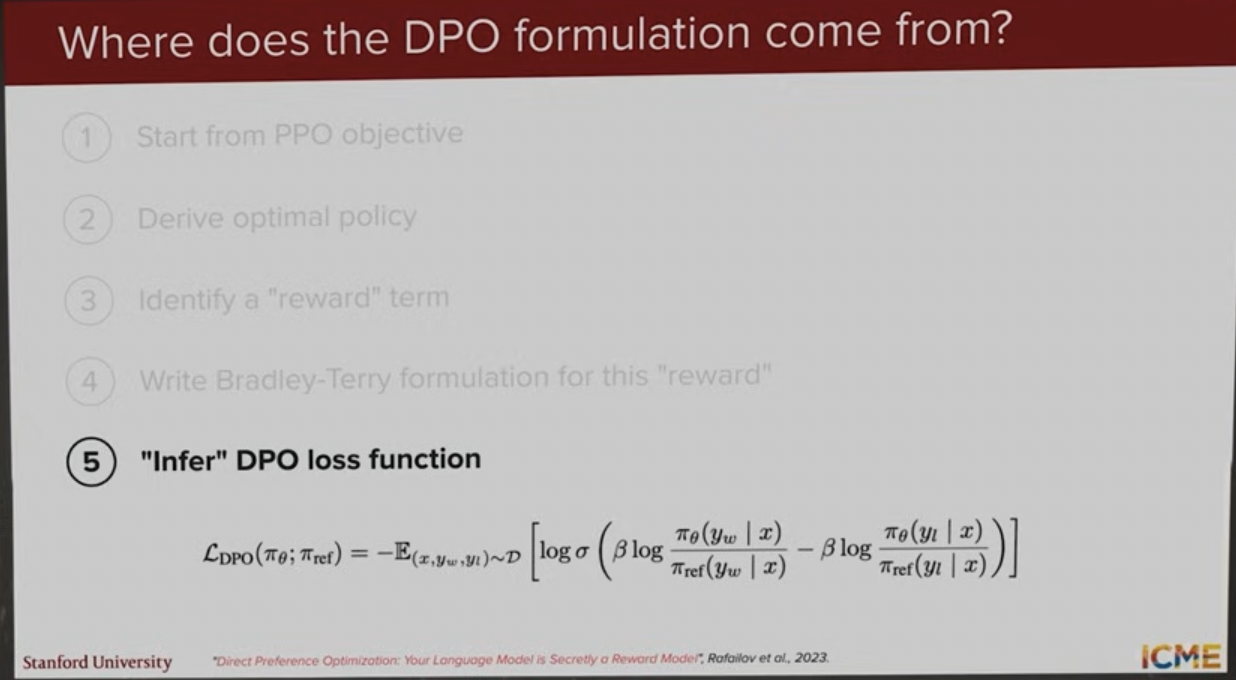
- Direct Preference Optimization
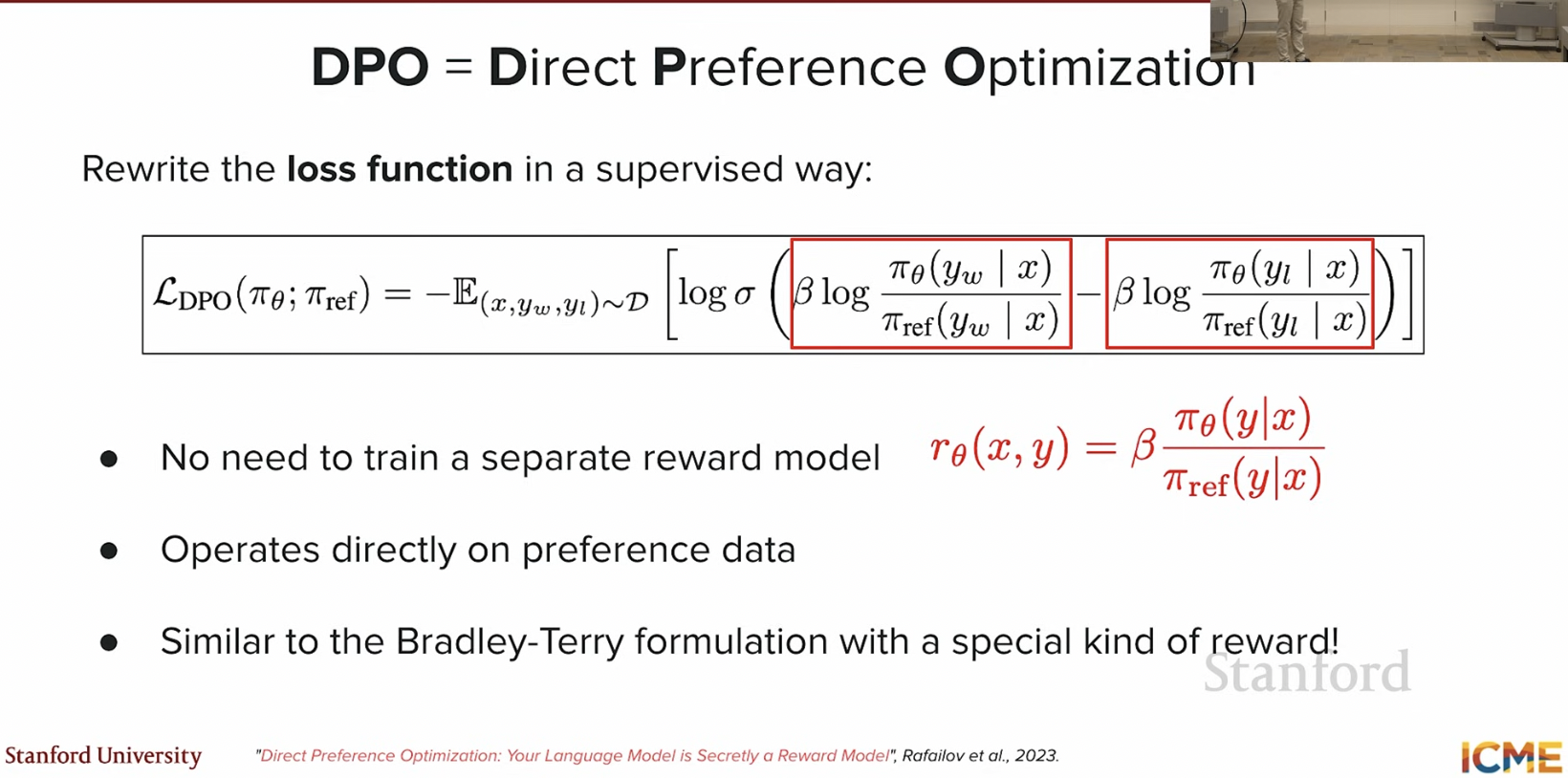
- rewrite the loss function in a supervised way
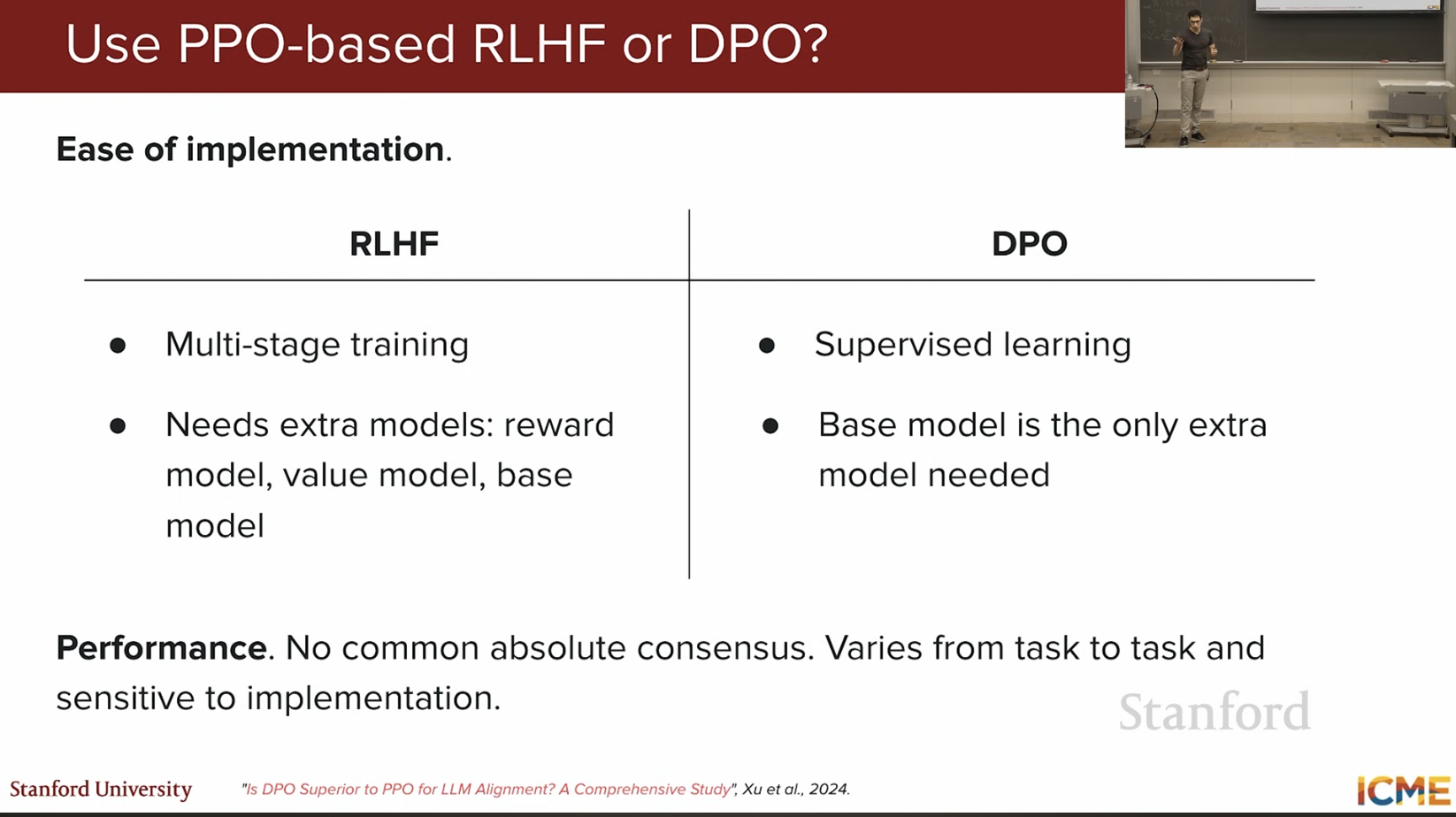
RLHF vs. DPO
-
two sets of weights: one is frozen (base model) and another is updated
-
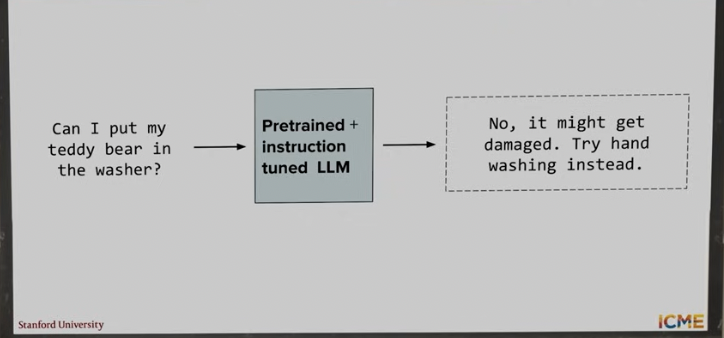
🤔❓ is there anything wrong with this answer?
-
Answer it is a bit rough. This is what preference tuning can help with.
-
A softer answer
It is better not to! Your teddy bear could hurt!